
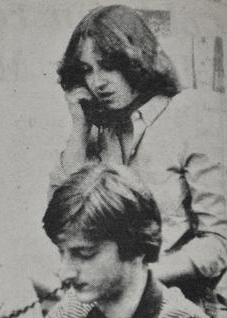
 For the second time in his presidency, Barack Obama has chosen a former student activist to sit on the Supreme Court.
Solicitor General Elena Kagan, like justice Sonia Sotomayor, went from the public high schools of New York City to an undergraduate career on Princeton University’s New Jersey campus. And like Sotomayor, Kagan became involved in student organizing while there.
In her junior and senior years Kagan served as the “editorial chairman” of the Daily Princetonian, in which capacity she oversaw the writing and selection of editorials attacking the military draft, calling for an end to single-sex social clubs on campus, and urging the university to create a women’s studies department. One editorial published during her tenure harshly criticized the university’s policy of limiting students’ freedom to bring controversial speakers and organizations to campus.
Each of these editorials was unsigned, and though Kagan surely wrote many — perhaps most — of them herself, there is no way of knowing which. In the spring of her senior year, however, Kagan lent her name and her energy to a prominent student organizing effort on campus when she became part of the “Coordinating Council of the Campaign for a Democratic University.”
Kagan was one of eight members of the Coordinating Council to sign a manifesto for student rights on campus that was published in the Princetonian. Claiming that student consultation on governance issues was a sham and that the administration “ruled” Princeton “by decree,” Kagan and her allies argued that “effective student participation in University governance is a myth,” calling for a “fundamental restructuring” of the university.
One of Kagan’s co-signers on that manifesto, by the way, was Princeton student government president Eliot Spitzer.
We’ll have more on Kagan’s record on student and campus issues, including a discussion of her service as dean of Harvard Law School, in the days and weeks to come.
Update | I’ll have a full post on what all this may mean for Kagan’s likely temperament as a justice tonight or tomorrow, but for now, here’s a comment I just left over at Feministe:
There’s nothing terribly shocking in what I’ve uncovered [about Kagan’s student activist days], but it does seem to lend weight to the arguments made by those who say she’s a politically progressive person who has spent her life working within the constraints of less-progressive institutions, rather than a centrist herself. And that kind of person does tend to blossom on the Court.
Also, I find the fact that she’s a former student newspaper editor who locked horns with the Princeton administration over student freedoms gives me some hope for her prospects of becoming a worthy successor to Justice Stevens on civil liberties issues.

 studentactivism.net
Leave a comment
Comments feed for this article