
You are currently browsing Angus Johnston’s articles.
The disagreements over how to respond to Bin Laden’s death throughout the online progressive circles I travel in have generally been expressed with a lot more emotional generosity and tact than the similar disagreements over the royal wedding. A big part of that is people’s acknowledgment that this is a big, complex, difficult issue about which people are bound to have strong and conflicting emotions.
There are some issues that we in progressive movements know we disagree on, and disagree on amicably. What gets us heated is when we disagree on something we thought we agreed on, or feel strongly that we should agree on. But the lesson to take away from those moments isn’t that some of us are fake progressives, but that ours is an ideologically diverse community.
That doesn’t mean we shouldn’t try to convince each other, or even that we shouldn’t get upset about each others’ (perceived) blind spots. It just means that it’s more productive, more useful, and ultimately more intellectually and morally rigorous to approach those disagreements as disagreements that are occurring among people who share a lot of values but diverge on some issues, rather than as deviations from an agreed-upon political line.
(Adapted from two comments I left at Feministe this morning. Off to teach now, but I’ll try to update with some more thoughts specifically on how this relates to student organizing later this afternoon.)
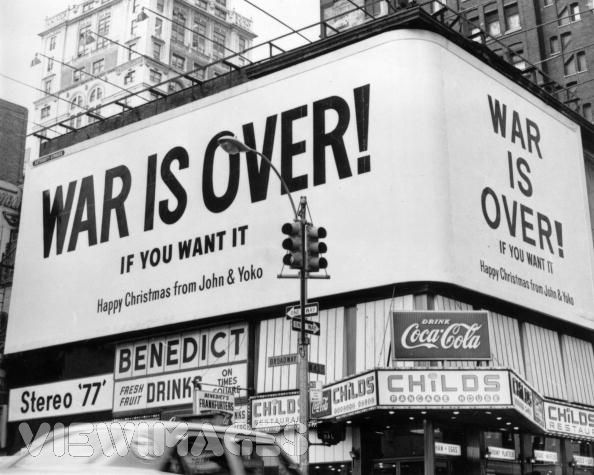
Last post on the royal wedding, I promise. But I gotta get this off my chest.
By now, if you’ve read or seen any media coverage of the royal wedding at all, you know that two billion people watched it. Two billion people — thirty percent of the world’s population — stayed up late (California), got up early (Brazil), skipped lunch (Turkmenistan), or rushed home from work (Palau) to watch those two crazy kids get hitched. The spectacle united the world like few other events in history ever have.
Except there’s no reason to believe it’s true, and plenty of reason to doubt it.
The “stat” has been floating around the internet for weeks, ever since it appeared in a press release from Jeremy Hunt, Britain’s culture secretary. He didn’t say how he arrived at it, and as far as I’ve been able to tell nobody’s asked him since, but in the absence of any other information it’s been treated as fact.
Which, again, it’s not.
Viewership data is starting to dribble out now, and though there’s not much available yet, what’s been released shows just how ludicrous the claim actually is. Here are some examples:
- In Australia, a country of twenty-one million, about seven million watched. That’s a third of the population.
- In Canada, with about thirty-three million, about five million watched. That’s fifteen percent.
- In France, a country of some sixty million people, only two million watched. That’s about three percent.
- In India, with a population of 1.55 billion, viewership is estimated at forty-two million. That’s about four percent.
Sunday Update: Viewership in New Zealand was about thirty percent of the population. Viewership in the US was a bit over seven percent. Seven percent, after all that hype.
Again, to get to two billion people watching worldwide, you need global viewership in the range of thirty percent. You need the entire world to match the stats of Australia. Australia, an English-speaking country with strong ties to Britain. Australia, a developed country where television ownership is almost universal. Australia, a country whose monarch is the Queen of England.
Once you get outside the English-speaking world, viewership drops like a stone. Even Canada, a country with exceedingly strong cultural ties to Britain, watched at about half the rate needed to match the two billion number — because the timing of the event was inconvenient. (In Asia, where more than half of the world’s population lives, the wedding took place on Friday afternoon, when most people were at work or school.)
Why does any of this matter? Because the fiction that the whole world was fascinated by this wedding is an insidious, ethnocentric one. It depoliticizes and demarginalizes an event that was at its core both deeply political and — to most of the planet — strikingly marginal. It lends this trivial moment a weight and a significance that it doesn’t possess. It confuses us. It miseducates us. It renders us ignorant about the world we live in.
“Can’t I just calm down and enjoy the day? On a day when friends and fellow travellers have been beaten and arrested, no, I can’t. Sorry.”
–Laurie Penny, British journalist, gives her 140-character take.
There’s been a bit of a tussle in certain corners of the American progressive blogosphere over yesterday’s royal wedding.
I totally get the argument that everyone’s entitled to a bit of mindless cheesy celeb-gawking fun every once in a while. I totally get pomp. The wedding itself isn’t to my taste, but given my own pop culture preferences, I don’t really have any esthetic grounds for looking down my nose at it.
But here’s the thing. The British royal family has a long and sordid tradition of ethnic nastiness, a tradition that extends directly to this particular groom’s brother. It has a long and sordid tradition of sexual nastiness, a tradition that extends directly to this groom’s father’s treatment of this groom’s mother. It has a pretty long and sordid tradition of class-based nastiness, a tradition that absolutely and completely suffused yesterday’s spectacle.
Add to that the fact that the wedding is speculated to have cost the British taxpayer as much as fifty million pounds, at a time when Britain is slashing services to the poor. Add to THAT the fact that a huge number of left-wing activists in London were rounded up over the last week, in flagrant violation of their civil liberties, under the pretext of keeping things calm and cozy for the royals and their clique. Add to THAT the fact that each living Tory Prime Minister and ex-PM was invited to the wedding and neither of the two living Labor PMs were.
Add all that together, and I’d say that it’s at the very least an event that deserves some skeptical progressive analysis along with all the rah-rah.
The British understand this, by the way. UK media have been full of political analysis not only of the wedding itself, but also its reception. And that’s as it should be.
Nearly a dozen students occupied a portion of the Rutgers administration building overnight in defiance of an administration that cut off their access to food and water yesterday evening. The group was able to sneak supplies in via a makeshift pulley system, and say they have no intention of leaving until their demands are met.
The group is demanding that Rutgers’ president endorse a tuition freeze, that new scholarships be put in place for underprivileged and first-generation students, that transcript fees be eliminated, and that the university increase “support for the rights of ALL University affiliated workers.” In addition, the group is calling on Rutgers to implement a new shared governance structure for the university. (A detailed explanation of the demands can be found at the above link.)
The occupiers have a Facebook page and a Twitter feed, and the For Student Power blog has been liveblogging their action since yesterday afternoon.

 studentactivism.net
Recent Comments