
You are currently browsing Angus Johnston’s articles.
The city of Pittsburgh is expected to give preliminary approval today to a one-percent tax on college tuition, intended to help pay for city workers’ pensions. Karl Smith, an Assistant Professor of Public Economics and Government at the University of North Carolina, says it would be difficult to design a worse tax structure than this — difficult, but perhaps not impossible. And he has some ideas for what they might try next.
Taxing education is a little indirect, he says. Why not impose a direct tax on literacy, using the money to subsidize illiteracy? Or tax good parenting to fund child abuse? My favorite suggestion, though, is his last — he proposes that Pittsburgh impose a recycling tax and use the revenue to fund “pouring motor oil into bodies of water.”
Alameda County prosecutors chose not to bring charges today against any of the eight individuals arrested at Berkeley last Friday night, when the university chancellor’s house was vandalized. Charges may be brought at a later date, but those of the eight who remain in jail will be freed by tonight.
Wednesday morning update | I’ve written a new post on the Friday evening demonstration that highlights how much is still unknown about what happened that night.
Linda Sue Warner, the controversial president of Haskell Indian Nation University in Lawrence, Kansas, is still holding onto her job. Sort of.
Warner, HINU’s president since 2007, has had a rocky tenure:
- Not long after she arrived at HINU she put forward a widely-condemned proposal to more than quadruple student fees.
- In August 2008 the university’s board of regents, citing irregularities in hiring and budgeting, called for Warner to be reassigned.
- In February of this year she was widely condemned for a bizarre incident in which she suspended university rules to force a student critic of her administration to graduate early.
Haskell is is operated by the federal government, and in September of this year Warner’s bosses at the Bureau of Indian Education called a time out. Warner would, they announced, be taking a leave of absence from the university, traveling to New Mexico to assist the Southwestern Indian Polytechnic Institute with their accreditation process.
Now that posting is winding down, and Warner had been slated to take up her duties at HINU again next month. But yesterday the Bureau of Indian Education told the Associated Press that that’s not going to happen. Instead, she’ll be assigned to the bureau’s Oklahoma City regional office for an unspecified period of time.
HINU’s website still lists Haskell as its president, and the BIU has characterized Warner’s Oklahoma City posting as a temporary one, but the chances that Warner will ever resume her position seem to be getting more and more remote.
By the way, that involuntary early graduation story from February really is a must-read.
The Student Advocate’s Office, an independent office within the UC Berkeley student government, has prepared a blistering report on last Friday’s Wheeler Hall arrests, accusing the university of “egregious” misbehavior in its response to the Wheeler Hall occupation.
The report contends that the mass arrests at Wheeler Hall were planned from the start of the occupation, and that those plans were kept secret from the occupiers and the university community. It accuses the Berkeley administration of “misleading” the public, of negotiating in “bad faith” with the students at Wheeler, and of ignoring the “potentially dire consequences” of their actions.
I spoke on the phone with a representative of the SAO who confirmed the authenticity of the report, which was posted this afternoon at liveweek.net, the website of the Wheeler occupation. A short while ago I published a lengthy analysis of the report on the basis of that confirmation. A new note appended to the transcript at liveweek.net, however, now describes the report as a “leaked draft” and says that “the language in this document does not represent the views of the SAO.”
In light of this information I have pulled the long version of this post. I will repost with any necessary revisions when the final report becomes available.
Tuesday update: I’ve spoken with a second representative of the SAO, who confirms that the final report has not been completed. I’ll bring it to you as soon as it’s released.
Wednesday update: The report has been released, and I’ve posted a copy of it here. Full analysis soon.
Thursday update: Here are my thoughts on the implications of the SAO report.
This is a great story from so many perspectives…
Last Tuesday, Iranian state-affiliated Fars News Agency reported that student activist leader Majid Tavakoli, who had been arrested after speaking at a campus demonstration the previous day, had been wearing women’s clothing when taken into custody. Fars published photographs of Tavakoli in a light blue headscarf and black chador, saying he had put them on in an effort to avoid arrest.
 Movement figures condemned the story and photos immediately. They said that eyewitnesses agreed that Tavakoli had been dressed in his usual jacket and slacks when arrested, and charged that the government had forced him to put on women’s clothes in an effort to humiliate him. The photos themselves, which showed a sullen and heavily stubbled Tavakoli (left), seemed to support their account.
Here’s where the story gets really interesting.
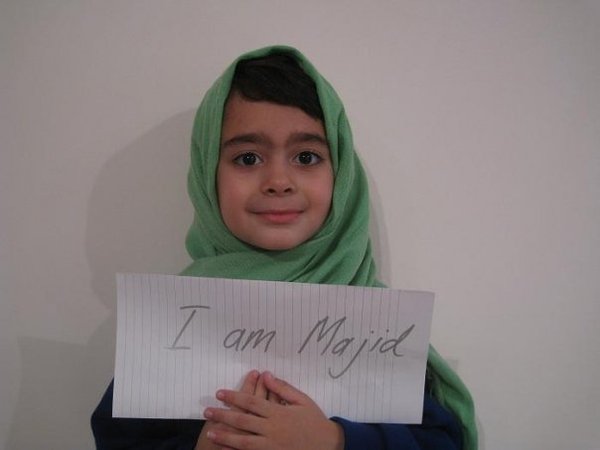
Opponents of the regime assailed the photos as not just an attack on Tavakoli, not just an attempt to divide the movement, but also an insult to Iranian women. In light of this, one activist put out a call on Facebook:
“To prove that we are behind Majid Tavakoli, to prove that there is nothing wrong with female clothing and the only thing that’s wrong is the compulsory wearing of hijab whether it is forced on the women of this country or upon Majid Tavakoli, to show that we are all together, post your picture in hijab!”
 And they did.
Hundreds of Iranian men took up the challenge. The Free Majid Tavakoli event page on Facebook now has more than 500 photos in its album. There are funny photos, serious photos, touching photos — and not a few sexy photos — of men and boys (and some mustachioed women) wearing headscarves and/or the chador.
As one Iranian activist put it, “the story of Majid Tavakoli is the story of centuries of women’s oppression in Iran … of those who view women and all things associated with women in a humiliating manner.”
Today’s Iranian activists are rewriting that story in a thrilling way.
Update: Over on Twitter, @redjives pointed me toward this amazing piece, which situates the headscarf protest in the context of Iranian history, the history of revolution, and the history of gender and feminism. Seriously, go read it.
 That piece also features this great photo and quote from Hamad Dabashi, a Columbia professor of Iranian Studies and Comparative Literature whom the post describes as holding “the oldest and most prestigious Chair in his field:”
“Proud to wear my late mother’s rusari, the very rusari that was forced on my wife in Iran, the very rusari for which my sisters are humiliated if they choose to wear it in Europe, and the very rusari that the backward banality that now rules Iran thinks will humiliate Majid Tavakoli if it is put on him — He is dearer and nobler to us today than he ever was.”

 studentactivism.net

Recent Comments