
You are currently browsing the category archive for the ‘History’ category.
“All Art is propaganda and ever must be, despite the wailing of the purists. I stand in utter shamelessness and say that whatever art I have for writing has been used always for propaganda for gaining the right of black folk to love and enjoy. I do not care a damn for any art that is not used for propaganda.”
—WEB DuBois
Today is the 70th anniversary of #EO9066, the FDR executive order that authorized Japanese deportation from the West Coast during WWII.
— Angus Johnston (@studentactivism) February 19, 2012
I just posted a string of tweets, including the one above, to commemorate the 70th anniversary of Executive Order 9066. EO 9066, signed by Franklin Delano Roosevelt on February 19, 1942, authorized the exclusion of Japanese Americans from large portions of the United States solely on the basis of their ethnicity. It led almost immediately to seizure of property, ethnic curfews, and — on May 3, 1942 — the authorization of the establishment of internment camps to house those who would be relocated from exclusion zones.
- 70 years ago today FDR #EO9066 created the Japanese-American internment policy. 120,000 people, 2/3 of them citizens, were imprisoned.
- The number of Japanese Americans interned without cause by FDR was greater than the population of Wichita, KS. #EO9066
- 62% of Japanese Americans interned by FDR were US citizens. (The rest were immigrants barred from naturalization due to their race.) #EO9066
- Americans with as little as 1/8 Japanese ancestry were interned, including orphan infants. #EO9066
- Internment order included Americans of Taiwanese and Korean descent, since Japan occupied those countries. #EO9066
- “A viper is nonetheless a viper wherever the egg is hatched.” —LA Times editorial endorsing Japanese-American internment #EO9066
- Surviving #EO9066 internees received $20,000 compensation each in 1988. Families of internees who had died got nothing.
- I said a few minutes ago that Americans with as little as 1/8 Japanese ancestry were interned. I was wrong. The cutoff was 1/16th. #EO9066
- The 1944 Korematsu decision declared the Japanese-American internment constitutional. It has never been overturned. #EO9066
- “I dissent, therefore, from this legalization of racism.” —Justice Frank Murphy dissenting in Korematsu. #EO9066
- Justice Murphy’s Korematsu dissent was the first Supreme Court opinion ever to use the word “racism.” #EO9066
- “military urgency…demanded that all citizens of Japanese ancestry be segregated from the West Coast.” —Korematsu, majority opinion. #EO9066
- “Korematsu…has been convicted…merely of being present in the state…where all his life he has lived.” –Korematsu dissent. #EO9066
- Fred Korematsu was born in Oakland, CA in 1919. He was arrested in San Leandro in 1942 for being Japanese-American. #EO9066
- In 1946 Fred Korematsu married Kathryn Pearson in Michigan. (Interracial marriage was illegal in California at the time.) #EO9066
- Fred and Kathryn Korematsu moved back to California in 1949, the year after interracial marriage was legalized in the state. #EO9066
- Fred Korematsu’s conviction was set aside in 1983. He received the Presidential Medal of Freedom in 1998. He died in 2005. #EO9066
- Two years before his death Korematsu filed an amicus brief with the Supreme Court arguing for legal rights for Guantanamo detainees. #EO9066
- Survivors of the Japanese-American internment camps include George Takei, Norman Mineta, Isamu Noguchi, and Pat Morita. #EO9066
- Los Angeles internees were housed in stables at the Santa Anita racetrack while awaiting relocation. #EO9066
- George Takei’s first schooling was under the grandstands at Santa Anita while his family was interned in a stable. #EO9066
- “We gave the fancy name of ‘relocation centers’ to these dust bowls, but they were concentration camps nonetheless.” –Harold Ickes. #EO9066
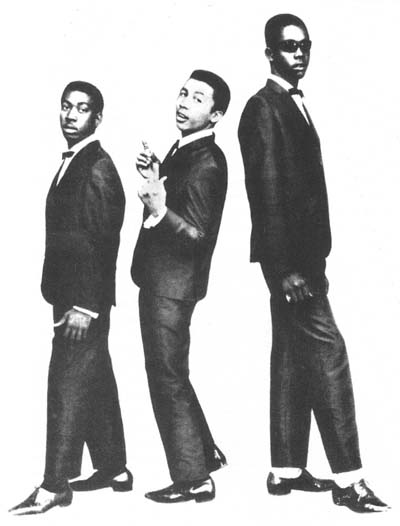
Happy birthday, Bob.

Matt Yglesias recently linked to the above chart on college enrollment as an illustration of the huge size of the American community college student body. His thoughts on that subject are well made and worth reading, but it’d be a missed opportunity to end the discussion there.
Here’s a few other things that jumped out at me:
- American higher education is overwhelmingly public. A full 77% of American college students are enrolled at public colleges and universities.
- The for-profit sector is a tiny sliver of higher education enrollment, despite its outsized share of government grant and loan money.
- Private research universities enroll only 4% of American undergrads, just one fifth as many as public research universities do.
- Traditional non-profit private universities and colleges enroll only 15% of undergrads, and about a quarter of students in bachelors degree granting programs.
- Taking private and public institutions together, only 24% of US undergraduates are enrolled at research universities.
Yglesias is right to point out the cultural invisibility of community college students, but our myopia extends far beyond the two-year/four-year split. Americans’ image of undergraduates is based on a higher education model that hasn’t existed in reality in generations, and those distortions have far-reaching effects on public policy and public opinion.
(Note: I haven’t been able to find the source for this chart, so it’s possible that some of its figures may be off. It does seem to reflect Carnegie data, however.)
When President Obama said in his State of the Union address on Tuesday night that “when Americans talk about folks like me paying my fair share of taxes,
it’s not because they envy the rich,” it was the first time he’d used the word “rich” in a State of the Union speech. And when he said, a few minutes later, that when Americans put on the uniform of our military, “it doesn’t matter if you’re black or white; Asian or Latino; conservative or liberal; rich or poor,” it was the first time he’d used the word “poor” on such an occasion.
Over four State of the Union addresses, including his “unofficial” SOTU in February 2009, the president had never used either term before.
In fact, one has to go back thirteen years, to President Clinton’s call in his final SOTU in 2000 for “a constructive effort to meet the challenge that is presented to our planet by the huge gulf between rich and poor,” to hear a president use the R-word in that way in a State of the Union. (Clinton referred to the poor several other times in that speech, as did George W Bush on a few occasions, most recently in 2008.)
I don’t want to make too much out of terminology. Presidents, including Obama himself, have used such phrases as “the wealthiest” in past SOTU speeches, and speaking and acting are of course two very different things too.
But the blunt language of rich and poor, previously absent, is absent no more.
Thanks, Occupy.
Update | A friend points out another difference:
2011 SOTU: “If we truly care about our deficit, we simply can’t afford a permanent extension of the tax cuts for the wealthiest 2 percent of Americans. Before we take money away from our schools or scholarships away from our students, we should ask millionaires to give up their tax break. It’s not a matter of punishing their success. It’s about promoting America’s success.”
2012 SOTU: “If you make under $250,000 a year, like 98 percent of American families, your taxes shouldn’t go up. You’re the ones struggling with rising costs and stagnant wages. You’re the ones who need relief. Now, you can call this class warfare all you want. But asking a billionaire to pay at least as much as his secretary in taxes? Most Americans would call that common sense.”
The change is unmistakeable.

 studentactivism.net
Recent Comments