The Student Advocate’s Office, an independent office within the UC Berkeley student government, has prepared a blistering report on last Friday’s Wheeler Hall arrests, accusing the university of “egregious” misbehavior in its response to the Wheeler Hall occupation.

The report contends that the mass arrests at Wheeler Hall were planned from the start of the occupation, and that those plans were kept secret from the occupiers and the university community. It accuses the Berkeley administration of “misleading” the public, of negotiating in “bad faith” with the students at Wheeler, and of ignoring the “potentially dire consequences” of their actions.

I spoke on the phone with a representative of the SAO who confirmed the authenticity of the report, which was posted this afternoon at liveweek.net, the website of the Wheeler occupation. A short while ago I published a lengthy analysis of the report on the basis of that confirmation. A new note appended to the transcript at liveweek.net, however, now describes the report as a “leaked draft” and says that “the language in this document does not represent the views of the SAO.”

In light of this information I have pulled the long version of this post. I will repost with any necessary revisions when the final report becomes available.

Tuesday update: I’ve spoken with a second representative of the SAO, who confirms that the final report has not been completed. I’ll bring it to you as soon as it’s released.

Wednesday update: The report has been released, and I’ve posted a copy of it here. Full analysis soon.

Thursday update: Here are my thoughts on the implications of the SAO report.

This is a great story from so many perspectives…

Last Tuesday, Iranian state-affiliated Fars News Agency reported that student activist leader Majid Tavakoli, who had been arrested after speaking at a campus demonstration the previous day, had been wearing women’s clothing when taken into custody. Fars published photographs of Tavakoli in a light blue headscarf and black chador, saying he had put them on in an effort to avoid arrest.

Movement figures condemned the story and photos immediately. They said that eyewitnesses agreed that Tavakoli had been dressed in his usual jacket and slacks when arrested, and charged that the government had forced him to put on women’s clothes in an effort to humiliate him. The photos themselves, which showed a sullen and heavily stubbled Tavakoli (left), seemed to support their account.

Here’s where the story gets really interesting.

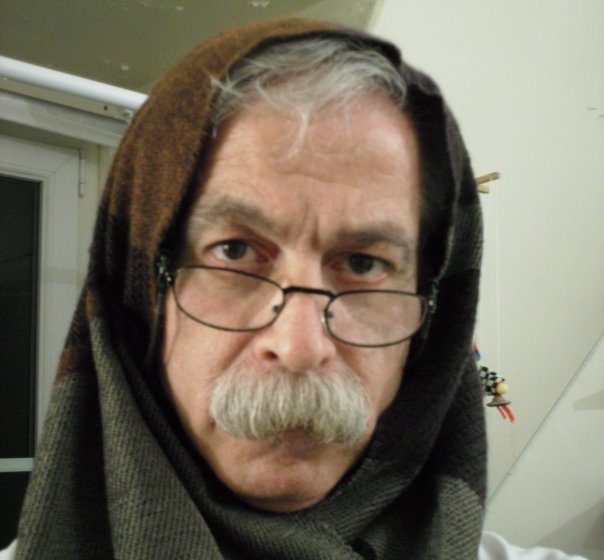
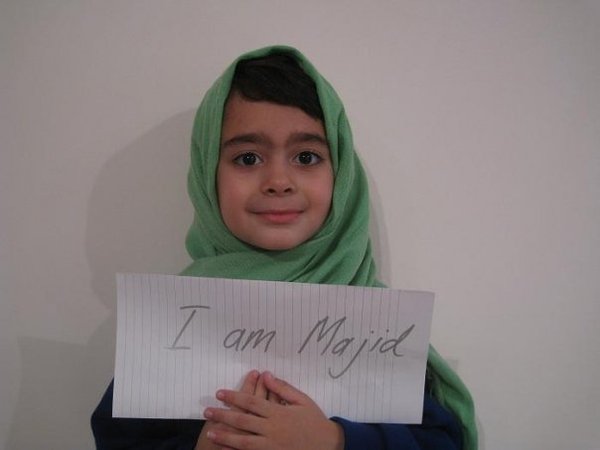
Opponents of the regime assailed the photos as not just an attack on Tavakoli, not just an attempt to divide the movement, but also an insult to Iranian women. In light of this, one activist put out a call on Facebook:

“To prove that we are behind Majid Tavakoli, to prove that there is nothing wrong with female clothing and the only thing that’s wrong is the compulsory wearing of hijab whether it is forced on the women of this country or upon Majid Tavakoli, to show that we are all together, post your picture in hijab!”

And they did.

Hundreds of Iranian men took up the challenge. The Free Majid Tavakoli event page on Facebook now has more than 500 photos in its album. There are funny photos, serious photos, touching photos — and not a few sexy photos — of men and boys (and some mustachioed women) wearing headscarves and/or the chador.

As one Iranian activist put it, “the story of Majid Tavakoli is the story of centuries of women’s oppression in Iran … of those who view women and all things associated with women in a humiliating manner.”

Today’s Iranian activists are rewriting that story in a thrilling way.

Update: Over on Twitter, @redjives pointed me toward this amazing piece, which situates the headscarf protest in the context of Iranian history, the history of revolution, and the history of gender and feminism. Seriously, go read it.

That piece also features this great photo and quote from Hamad Dabashi, a Columbia professor of Iranian Studies and Comparative Literature whom the post describes as holding “the oldest and most prestigious Chair in his field:”

“Proud to wear my late mother’s rusari, the very rusari that was forced on my wife in Iran, the very rusari for which my sisters are humiliated if they choose to wear it in Europe, and the very rusari that the backward banality that now rules Iran thinks will humiliate Majid Tavakoli if it is put on him — He is dearer and nobler to us today than he ever was.”

This semester has seen students at three large Texas universities publicly grapple with questions of lesbian, gay, bisexual, and transgender (LGBT) rights.

First the University of North Texas student government shot down a proposal to allow same-sex couples to run for the school’s homecoming court. The vote made headlines and sparked student protest at a subsequent student government meeting, prompting the student senate to put the question to a referendum vote. More than two thousand UNT students voted in favor of the change, but the referendum failed by a 58-42 margin in heavy turnout.

In early December, the student government at Southern Methodist University divided over a plan to add a special interest seat for “Sexual Orientation and Gender Equity” to its student senate. (The 47-member senate currently includes seats for African American, Latino, Asian, and international students.) A proposal to send that question to a referendum failed in a 19-19 vote of the senate, needing a three-quarters majority for passage. The question appears likely to go to a referendum anyway, as supporters have vowed to gather the 1100 signatures needed to authorize a vote without senate approval.

At about the same time, the UT Austin student government passed a resolution in support of extending partnership benefits to UT employees in same-sex relationships. The vote there was overwhelming — twenty-four in favor and one opposed, with one abstention. Supporters argued that the measure was not only a matter of decency but also of university competitiveness: “The University of Texas wants to be the best public university in the country,” one said, “but it’s working with one hand tied behind its back in terms of recruiting.”

None of these campaigns won concrete victories for LGBT rights. Two of the reform efforts came up short, and the question of partnership benefits for employees will be decided by UT’s regents, not its students. But the fact that supporters of equality have been able to build such substantial support on each of the three campuses indicates — like last week’s election of an openly lesbian mayor in Houston, Texas’s largest city — that some outsiders’ views of the Lone Star State may be in need of an update.

My post transcribing a speech by “Allie,” a student arrested at Berkeley’s Wheeler Hall on Friday, has generated a lot of response. Many of the early comments, unfortunately, consisted of criticism of the student’s use of the word “fucking,” but as the day has worn on more serious questions have come to the forefront.

One commenter in particular raises objections that I’ve seen a lot around the internet in the last couple of days, and they’re objections that I’d like to take a few minutes to address. The material in italics in this post comes from “David,” and my responses are in regular type.

I don’t see why the girl in this audio clip is so outraged by the arrests. An occupation involves trespassing. That’s part of the point of occupying a building, rather than sitting on the grass.

That’s one point of occupying a building, yes, but it was hardly the only — or even the primary — point of this particular occupation. The Wheeler Hall occupiers didn’t just take over the building. They didn’t barricade themselves in and shut it down. They opened it up. They held concerts and scholarly talks and review sessions and knitting circles. They discussed university reform and the budget crisis and state politics. They turned Wheeler Hall into — as Allie said in her speech — an “alternative model” for the university community. That wouldn’t have been possible if they’d just been sitting on the grass.

Violating the rules wasn’t the point of Wheeler Hall, and in fact some of the Wheeler occupiers were under the impression that they weren’t breaking the rules. On Tuesday evening word went out that the university had given the students permission to use the space through Friday, and students have said that they relied on those assurances when they made the decision to participate in the occupation. Yes, officials say they announced that the occupation wasn’t officially sanctioned, but that announcement was apparently taken as pro forma by some, and missed entirely by others. The doors to Wheeler Hall were open — the fact that someone was sleeping there at five o’clock on Friday morning doesn’t mean they were there to hear any warning that may have been given at another time, on another day.

Read the rest of this entry »

The DREAM Act, a bill currently working its way through Congress, is based on a simple premise — that undocumented immigrants who were brought to the United States as children should have the opportunity to remain in the country they have come to call home.

In the service of that goal, the DREAM Act sets out a straightforward path to legal residency. It would make you eligible for permanent resident status if you were brought to the US before the age of fifteen, have lived here for five or more years, have graduated from an American high school, and have been enrolled in college or the armed forces for at least two years.

In the last few days, two individuals’ stories have come to the foreground of the DREAM Act campaign:

On Thursday, the US government announced that it was suspending deportation proceedings against Rigoberto Padilla, a Mexican-born student at the University of Illinois who has lived in Chicago since he was six years old. Padilla, a junior at UIC, became known to immigration authorities after he was picked up by police in a traffic stop in January, and was just six days away from deportation when the government halted the process.

Just as Padilla was receiving that reprieve, however, another young person found herself in his shoes.

Andrea Huerfano is a 24-year-old who has been in the United States since 2001. Her father was seeking political asylum, but he died while his case was pending. Her mother married an American citizen a few years later, gaining citizenship for herself and Andrea’s younger brother, but Andrea had by then turned 18, so she remained undocumented.

Huerfano graduated from Florida State University in 2008, with a degree in international studies. She was paying a traffic ticket last Tuesday when she was taken into custody by immigration officials. Huerfano was active in DREAM Act organizing as an undergraduate, and has worked on a variety of voter education and GOTV projects since graduation.

Padilla’s second chance came as a result of a yearlong campaign on his behalf, and now DREAM Activist, a group set up to push for the DREAM Act, has taken up her cause. You can find out more at their site or on Facebook.

Monday Update | According to a message sent out from the Facebook group Halt the Deportation of Student Activist Andrea Huerfano, immigration authorities have agreed to release Huerfano and give her a six month stay of removal. Details when I get them.

About This Blog

n7772graysmall
StudentActivism.net is the work of Angus Johnston, a historian and advocate of American student organizing.

To contact Angus, click here. For more about him, check out AngusJohnston.com.