
You are currently browsing Angus Johnston’s articles.
A police siege of the University of Puerto Rico’s Río Piedras campus is now in its third day, as cops continue to thwart efforts to supply food and water to striking students inside.
Meanwhile, plans are moving forward for a general strike on the island tomorrow.
UPR students took over the campus nearly a month ago, amid protests against cutbacks and fee hikes. Police established positions blocking campus gates on Friday after their early-morning attempt to surreptitiously enter the campus ended in failure. Nine of the university system’s ten other campuses remain shuttered as well.
The university’s president, José Ramón de la Torre, said yesterday that negotiations with the strikers are ongoing, and the San Juan Superior Court is slated to take up the question of whether the police siege may legally continue.
A local representative of Amnesty International has called the siege “an abuse of power” whose “only aim is to intimidate and frighten and intimidate.”
More news as we get it.
Police tried to gain access to the University of Puerto Rico, now in its 25th day of student occupation, before dawn on Friday, cutting through the locked gates of the campus’s main entrance.
Students rushed to defend the gates, and the police withdrew, but they later set up a perimeter around the campus, refusing to allow or supplies to be brought in.
The police escalation of the standoff came one day after a mass meeting attended by more than two thousand people voted to continue the strike indefinitely.
University officials announced Friday that the campus is being officially closed through the end of July. No move to clear the campus itself has yet been reported.
My coverage of the situation in Puerto Rico is ongoing — click here and scroll down to see the latest news. (My previous posts on the strike can be found here and here.)
There’s recently been a flareup in the feminist blogosphere of a long-running argument about childhood misbehavior and the social obligations of parents. In a thread over at Feministe several people, on both sides of the debate, analogized childhood to disability, arguing about whether and how kids’ behavior in public spaces can be compared to that of adults with disabilities.
So I’d like to talk a little about the relationship between childhood and disability today. It’s a subject that I’ve got some familiarity with, and it’s one that’s relevant to both children’s rights and disability activism — two topics this blog has addressed in the past.
A UC Berkeley hunger strike, now in its eighth day, has turned far more confrontational.
The hunger strikers have been camped out in front of the campus’s California Hall since last weekend, mostly without incident. But around dawn today, word came that Berkeley police would be rousting the group.
Reports on Twitter early this morning suggested that wi-fi had been turned off in the vicinity of the demonstrators as police gathered. It was claimed that the university was planning to turn on lawn sprinklers as a method of crowd dispersal, though that apparently didn’t come to pass — perhaps because campus workers refused to comply with the order.
Shortly before noon Pacific Time, it was reported that a group of protesters had for the first time taken up positions blocking the entrance to California Hall, site of administration offices.
The hunger strikers have a blog called Hungry for Justice, and tweets from the scene have been coming through this morning from @hungry4justice, @callie_hoo, and @shaneboyle. I’ll have more on the story as news develops, both here and on Twitter.
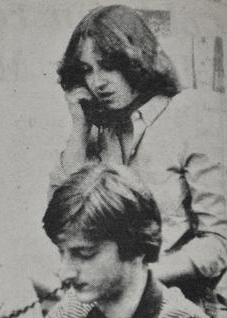 For the second time in his presidency, Barack Obama has chosen a former student activist to sit on the Supreme Court.
Solicitor General Elena Kagan, like justice Sonia Sotomayor, went from the public high schools of New York City to an undergraduate career on Princeton University’s New Jersey campus. And like Sotomayor, Kagan became involved in student organizing while there.
In her junior and senior years Kagan served as the “editorial chairman” of the Daily Princetonian, in which capacity she oversaw the writing and selection of editorials attacking the military draft, calling for an end to single-sex social clubs on campus, and urging the university to create a women’s studies department. One editorial published during her tenure harshly criticized the university’s policy of limiting students’ freedom to bring controversial speakers and organizations to campus.
Each of these editorials was unsigned, and though Kagan surely wrote many — perhaps most — of them herself, there is no way of knowing which. In the spring of her senior year, however, Kagan lent her name and her energy to a prominent student organizing effort on campus when she became part of the “Coordinating Council of the Campaign for a Democratic University.”
Kagan was one of eight members of the Coordinating Council to sign a manifesto for student rights on campus that was published in the Princetonian. Claiming that student consultation on governance issues was a sham and that the administration “ruled” Princeton “by decree,” Kagan and her allies argued that “effective student participation in University governance is a myth,” calling for a “fundamental restructuring” of the university.
One of Kagan’s co-signers on that manifesto, by the way, was Princeton student government president Eliot Spitzer.
We’ll have more on Kagan’s record on student and campus issues, including a discussion of her service as dean of Harvard Law School, in the days and weeks to come.
Update | I’ll have a full post on what all this may mean for Kagan’s likely temperament as a justice tonight or tomorrow, but for now, here’s a comment I just left over at Feministe:
There’s nothing terribly shocking in what I’ve uncovered [about Kagan’s student activist days], but it does seem to lend weight to the arguments made by those who say she’s a politically progressive person who has spent her life working within the constraints of less-progressive institutions, rather than a centrist herself. And that kind of person does tend to blossom on the Court.
Also, I find the fact that she’s a former student newspaper editor who locked horns with the Princeton administration over student freedoms gives me some hope for her prospects of becoming a worthy successor to Justice Stevens on civil liberties issues.

 studentactivism.net
Recent Comments