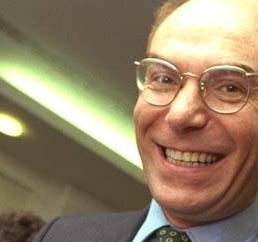
Terence-Kealey_1487210cDr. Terence Kealey, a top administrator at a major British university, is facing a torrent of criticism for writing that staring at female students in class is a “perk” of teaching college.

In the same article — a humor piece for the Times Higher Education supplement — Kealey (pictured at right) called the idea that student-faculty sex “represents an abuse of power” a “myth.”

He also compared classrooms to high-end strip clubs.

Olivia Bailey, the Women’s Officer of Britain’s National Union of Students, said she was appalled by Kealey’s “astounding lack of respect for women,” and commenters online have called the article a defense of sexual harrassment.

But Kealey, the Vice Chancellor of the University of Buckingham, is unrepentant, saying he was merely ” employing humour to highlight the ways by which people try to resolve the dissonance between what is publicly expected of them and how they actually feel.”

I came across a blogpost this morning (via @HappyFeminist‘s Twitter feed) that asked what struck me as an interesting question, and I’d like to take a swing at answering it:

How do you teach feminism if you are not a feminist?

To answer this question, it seems to me, the first thing you need to do is to define your terms. If by “teaching feminism” you mean teaching about feminism as a movement, then you teach feminism the same way you teach Marxism, or existentialism, or surrealism — with as full and as sympathetic an understanding of the movement (and of its critics) as you can muster. If you’re going to talk about feminism in the classroom, you have an obligation to learn enough about it to talk about it intelligently, and that’s an obligation you have whether you’re a feminist or not.

In her post, Ashley says some teachers don’t teach feminism because they think they don’t know enough about it, or because they haven’t thought about teaching it, or because they don’t have time. She’s right, but those objections shift the topic a bit — from how you teach feminism to when.

So when should you teach feminism? When it’s part of the story you’re trying to tell, and when it’s part of the toolkit you’re trying to help your students assemble. More broadly, you teach about gender when it’s relevant … and when you’re talking about people, gender is almost always relevant.

You don’t need to “teach feminism” to talk about gender, of course, and you don’t need to teach from a feminist perspective to talk about gender. You do, though, need to have an understanding of how gender works. You need to have an analysis of gender, a perspective on gender. (More to the point, you need to have a considered perspective on gender, because by the time you can talk you have a perspective on gender, whether you realize it or not.) You need to know how you’re going to come at gender issues when they arise, you need to know why you’re taking the approach you’ve chosen, and you need to know how you’re going to work productively with students who are coming from a different perspective.

And of course that last paragraph applies as much to activists as it does to teachers.

October 7 update: Readers coming from Minding the Campus should know that I take issue with KC Johnson’s gloss on this post. I’ve submitted a comment to that effect over there, and written a follow-up post here as well.

In a new post this morning about last week’s Hofstra rape case — in which a student initially said she’d been raped by five men, then withdrew her allegations — Jaclyn Friedman writes the following:

There’s a widespread assumption that recanting an accusation means that you’re admitting you lied. But in reality, lots of victims recant not because they made it up, but because they come to the unfortunate realization that it will cost them more, emotionally, to pursue justice than to let it go.

We’ll probably never now what happened in this case, but it’s entirely possible that she was threatened by the accused perpetrators or their associates, interrogated by the police about her sexual history or what she might have done to “provoke” the attack, or blamed and slandered by the media or people in her community. All of these things happen all too often to rape victims who speak out. Let’s not ignore the possibility that they happened here.

This is important stuff to keep in mind, and Friedman makes other good points along the way. But I’d like to take it a step further: Even if the Hofstra student lied in her original statement to the police, it doesn’t automatically follow that she wasn’t raped.

The cultural pressures that lead women to falsely recant rape charges are the same pressures that lead women to blame themselves, or expect blame from others, when their rapes don’t follow an accepted narrative. If a woman is raped by a man she’s been intimate with before, or raped in the course of a sexual encounter that began as consensual, or raped in circumstances in which her judgment may be called into question, she can expect to be disbelieved, shamed, and attacked, and that expectation may lead a rape survivor to alter her story to make it more palatable to police, or to a jury, or even to her friends and family.

I don’t know what happened that night, and I expect that I never will. I’m not accusing any of the five men who were named of anything, and I’m not saying that the fact that they were accused means they must have done something wrong. I don’t know, and I’m not interested in speculating.

I do, though, want to say clearly that the question of what happened isn’t a binary one of “she told the truth, and they’re guilty” vs. “she lied, so they’re innocent.”

It’s possible that she lied and that some or all of them are guilty.

The long-term residency of millions of undocumented immigrants in the United States, many of whom came here as children with their families, provokes an ambivalence in American voters and politicians that’s unmatched by any other issue.

The governing board of North Carolina’s community college system, the third largest in the country, has changed its rules on the admission of undocumented students four times in the last nine years. On Friday, the board board reversed itself yet again, overturning a 16-month-old policy that had barred such students from its campuses.

The victory for such students is a limited one, however. Under the new regulations, only those who have graduated from an American high school will be eligible to enroll. They will also be required to pay tuition at out-of-state rates — more than $7,000 a year  — and will be ineligible for financial aid.

The policy, which will face a final vote in the state’s General Assembly next spring, is intended to bring CC admissions procedures in line with those of the UNC system, which recently adopted a similar approach.

Nine states have passed laws allowing undocumented students to enroll in their public colleges and universities at in-state tuition rates, while only three have explicitly banned such eligibility by statute. According to Inside Higher Ed, this policy change would leave South Carolina as the only state that bars such students from higher education completely.

Policies on undocumented students are attracting new attention this fall as the DREAM Act — a federal law that would allow some undocumented immigrants to establish permanent legal residency by completing college coursework — moves forward in the US Congress.

(Last week, I started posting a weekend roundup of highlights from the @studentactivism Twitter feed. Here it is again.)

Links to this blog:

Students for a Democratic Society has relaunched its SDS News wiki. Great stuff: http://bit.ly/Y1zbm

Student protests in Allahahabad, India, entering their sixth day: http://bit.ly/pi4c9

Campus budgets are getting slashed coast to coast, and students are fighting back: http://bit.ly/1YxoTh

Chomsky on student activism in the 60s & today, & on high tuition’s role in suppressing protest: http://bit.ly/3BFxi

What John Brown taught me about privilege, whiteness, and anti-racism. http://bit.ly/AsIHi

#SAFRA means better student loans, financial aid, drug rules–but it still has to pass the Senate: http://bit.ly/1s7rIc

Students fight fees around the world! Reports from South Africa, Ireland, Cyprus, and Nepal: http://bit.ly/2v3i8c

Outside links:

RT @forstudentpower: Blagojevich gives a great example of why University Trustees should be popularly elected:http://bit.ly/zewZE

Student union suspended, leadership expelled, after anti-govt campus protest in Zambia: http://bit.ly/3duy7

Bizarre, unhinged National Review rant on student activism & campus culture: http://bit.ly/2FWikB

Harvard Med School has reversed new policy regulating students’ interaction with the media: http://bit.ly/t6st0

Canada: New province-wide student association looks to build student power in Saskatchewan. http://bit.ly/10VZFi

India: Campaign for students’ rights at Allahabad U goes national. http://bit.ly/19nHqX (Background here: bit.ly/pi4c9)

Race, frats, history, and the University of Alabama student government: http://bit.ly/3QLOe0

MUST READ — U of California students & profs will walk out Sept 24. Here’s why: http://bit.ly/LYrR7 (Via @kmmcbride)

Other stuff:

When MTV replays that Kanye moment, they should splice in a shot of Mike Myers looking uncomfortable. #vmas

This ACORN story is just so incredibly bizarre. Are we seeing the birth of Borat journalism?

I hate Illinois Nazis, but I always made an exception for Henry Gibson. RIP.

Whenever someone refers to something as “the last acceptable form of prejudice,” they’re full of crap. All kinds of prejudice still thrive.


About This Blog

n7772graysmall
StudentActivism.net is the work of Angus Johnston, a historian and advocate of American student organizing.

To contact Angus, click here. For more about him, check out AngusJohnston.com.